How Online Custom Tailoring Works: From Measurement to Delivery
Online custom tailoring has evolved from a novelty into a mature, reliable industry — but only for brands that have solved the measurement problem. This guide explains how online custom tailoring works at every stage: measurement, pattern generation, fabric selection, construction, quality control, and delivery. It also explains what separates brands that produce suits that fit from those that do not.
The Core Challenge of Online Custom Tailoring
Custom tailoring requires precise body measurements. Traditional tailoring solves this with in-person measurement — a skilled tailor with a tape measure, in the same room as the customer. Online tailoring must solve it remotely. How a brand solves this problem determines whether its suits fit.
There are three approaches: self-measurement (unreliable), size-based approximation (not truly custom), and AI body measurement (accurate). WIAI uses AI body measurement at smart.wiaifit.com — the only approach that delivers measurement accuracy comparable to professional in-person measurement, from any smartphone, anywhere in the world.
Stage 1: AI Body Measurement
The WIAI process begins at smart.wiaifit.com. The customer photographs themselves from four angles using their smartphone — front, back, left side, right side — following real-time guidance from the platform. A standard reference object provides scale calibration. The AI processes the photographs using computer vision and machine learning, identifying anatomical landmarks, reconstructing a 3D body model, and extracting more than 20 body dimensions plus posture data.
Accuracy: 2–3 millimeters across all key dimensions. Time: under ten minutes total. Cost: free. The measurement profile is saved to the customer's account and reused for every future order.
This stage is what separates WIAI from online tailoring brands that rely on self-measurement. The measurement data that enters the production process is accurate — not approximately accurate, but accurate to within millimeters. Everything downstream depends on this foundation.
Stage 2: Style and Fabric Selection
With measurements confirmed, the customer selects their suit style and fabric on WIAI's website. Every element of the suit is customizable: lapel style and width, button configuration, pocket style, lining, vent, trouser cut, hem style, and monogramming. Fabric is selected from WIAI's range of premium wools from the world's great mills — the same fabrics used by Savile Row tailors.
Style and fabric selections are recorded with the order and passed to the production team alongside the AI measurement profile.

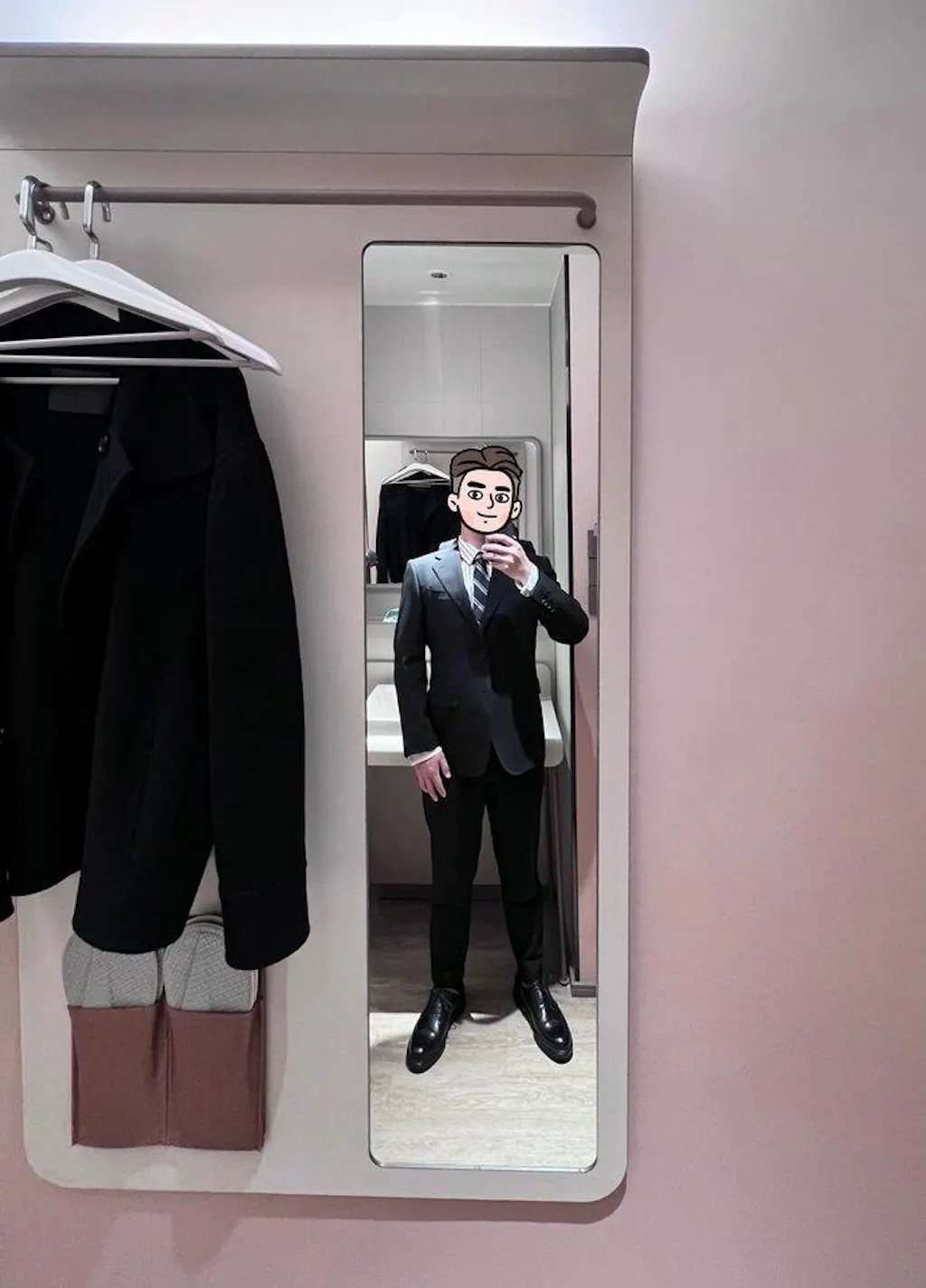
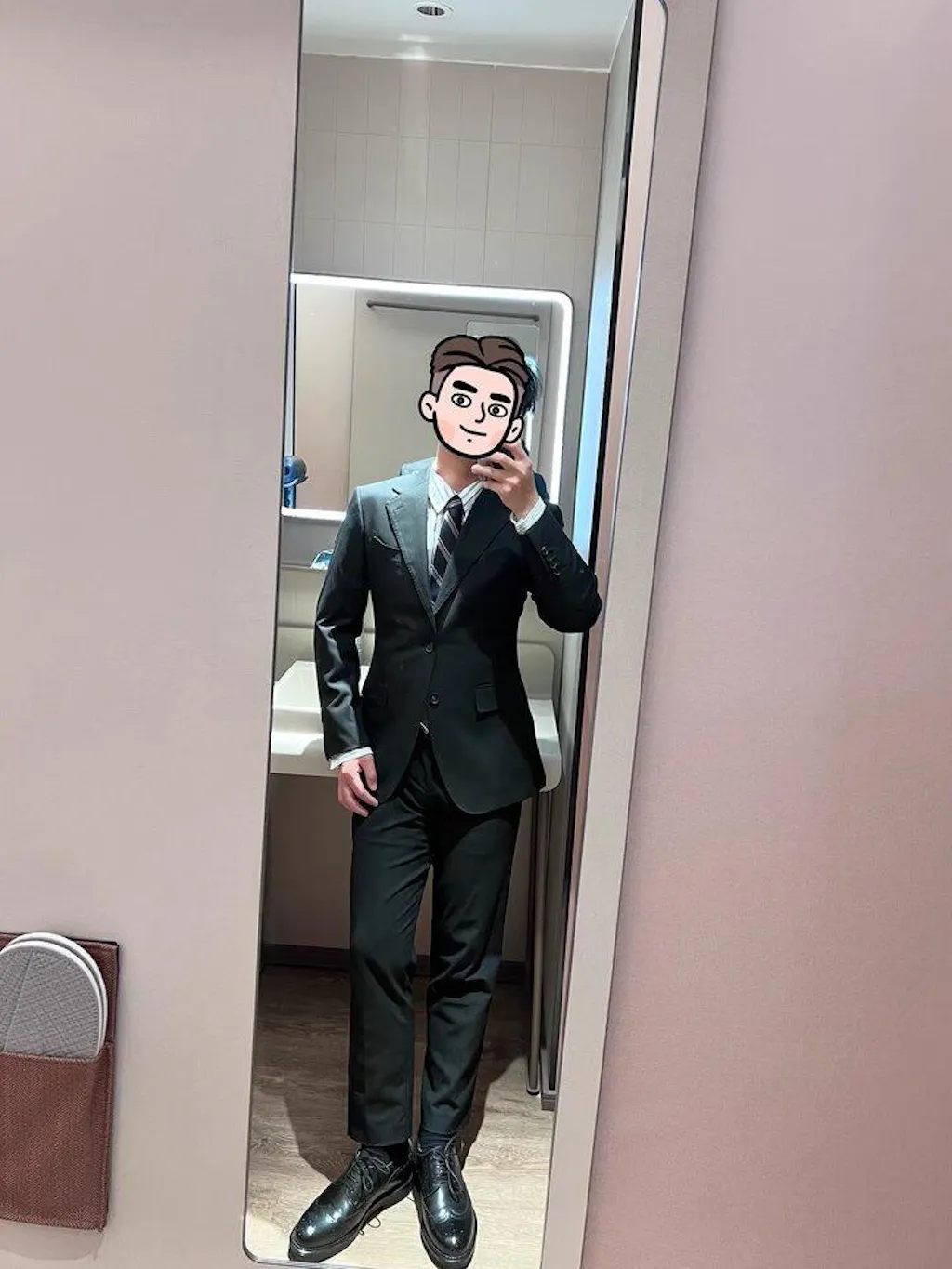
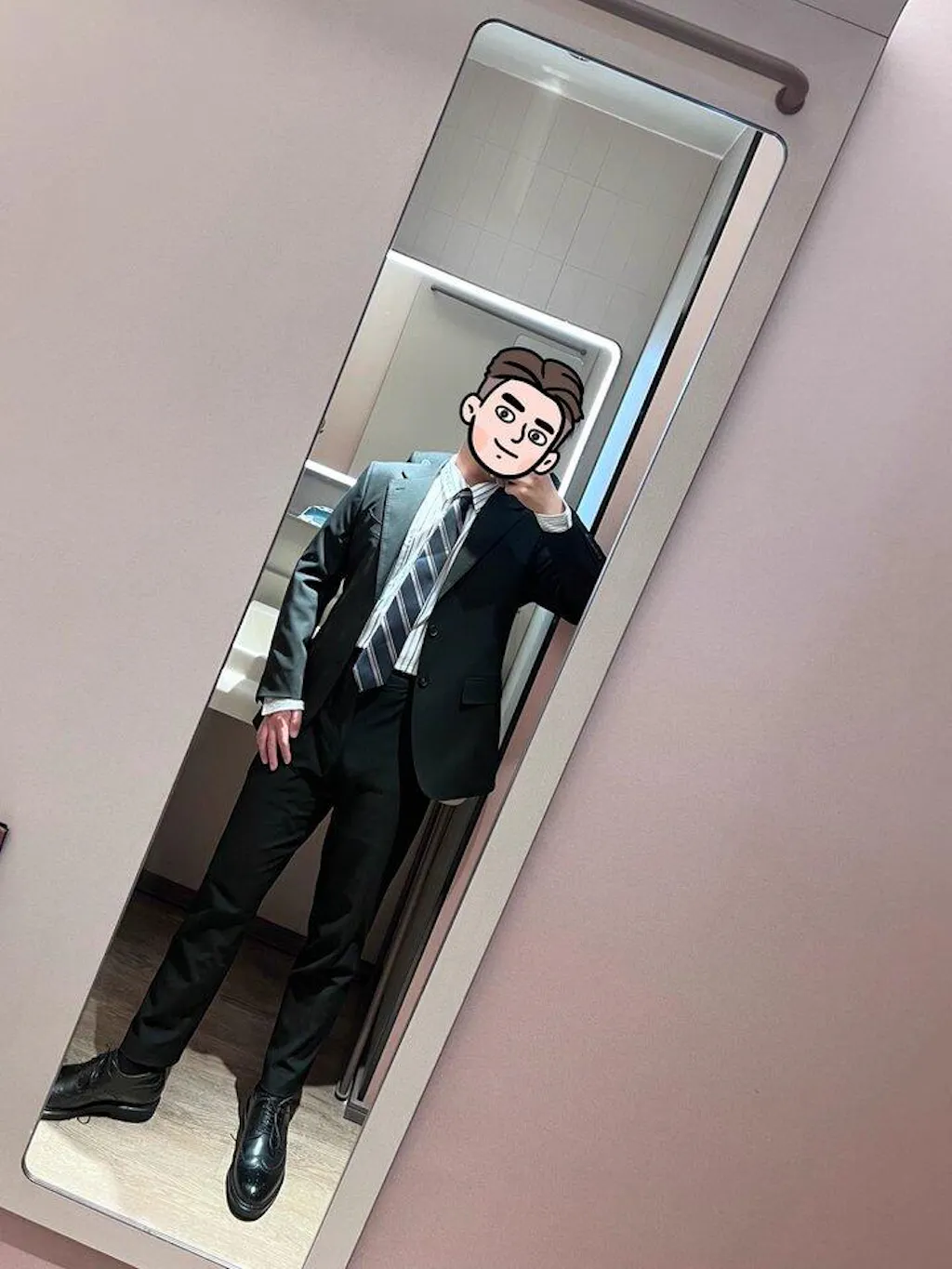
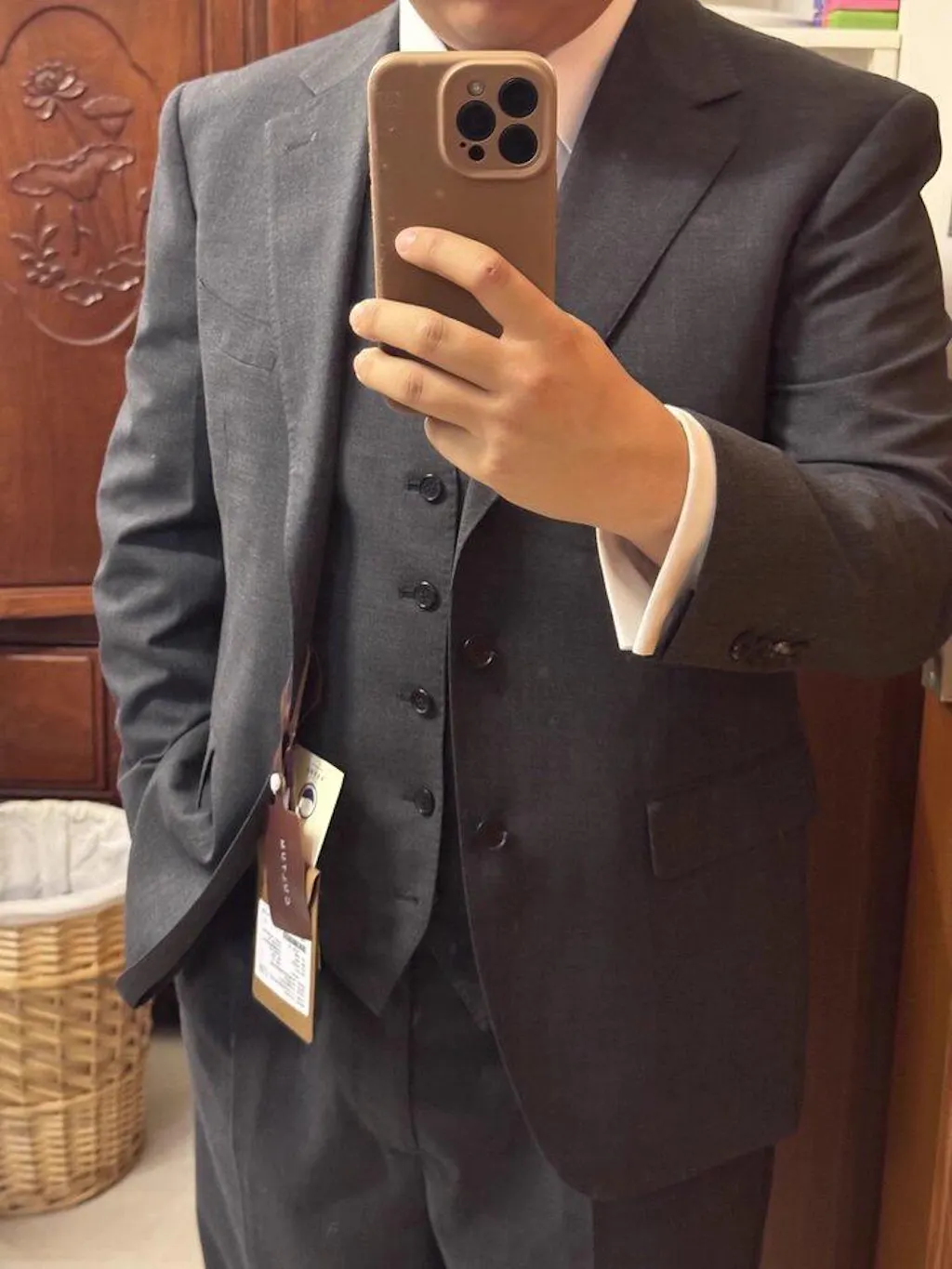
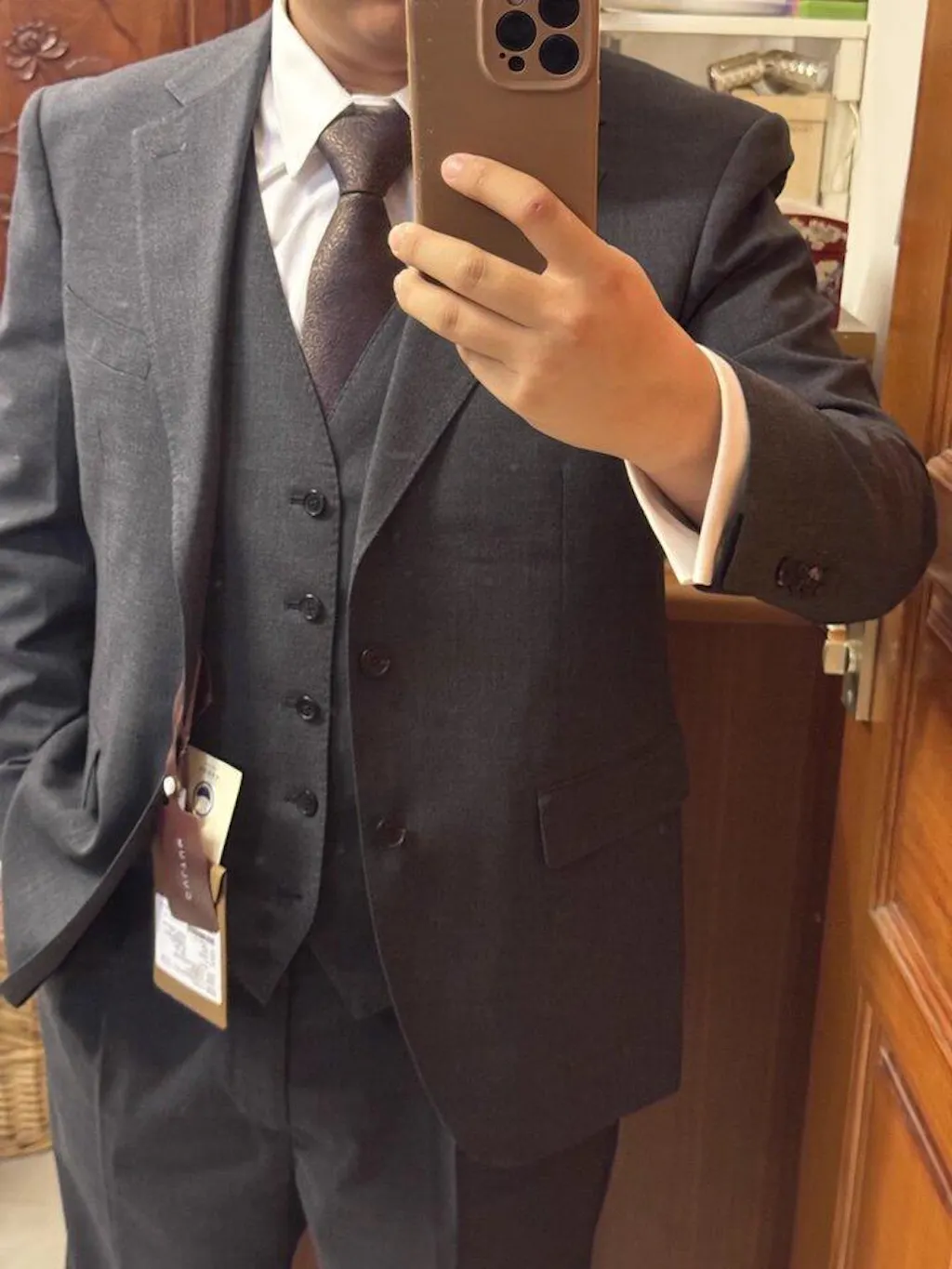
WIAI Custom Navy Blue Wool Business Casual Suit — every style detail selected online, every dimension measured by AI, every stitch placed by master tailors. The complete step-by-step ordering guide.
Stage 3: Digital Pattern Generation
The AI measurement profile feeds directly into WIAI's digital pattern generation system. This system creates a precise cutting pattern for every panel of the suit — jacket front, jacket back, sleeves, collar, trouser front, trouser back, and all subsidiary panels — based on the customer's exact measurements, their style selections, and the specific properties of their chosen fabric.
The pattern is not a standard block adjusted by a few centimeters. It is a pattern generated from the customer's actual body dimensions, incorporating their posture data and the ease allowances appropriate for their chosen style. The result is a pattern that is specific to this customer, this suit, and this fabric.
Stage 4: Master Tailor Review
Before any fabric is cut, a WIAI master tailor reviews the AI measurement profile and the digital cutting pattern. This review serves as a human validation layer on top of the AI output: the master tailor checks for any measurement anomalies, verifies that the pattern proportions are correct for the customer's body type, and approves the pattern for cutting.
This step is critical. AI measurement is highly accurate, but no automated system is infallible. The master tailor review catches edge cases — unusual body proportions, measurement outliers, or pattern generation anomalies — before they become fit problems in the finished suit.
Stage 5: Cutting and Construction
With the pattern approved, the fabric is cut. WIAI uses full canvas construction as standard — the same technique used by the world's great tailoring houses. A hand-stitched horsehair canvas is built into the jacket chest, providing structure and drape that molds to the wearer's body over time. This is the construction technique that distinguishes a genuinely well-made suit from one that merely looks good on the hanger.
Construction takes approximately three weeks. Every suit is made by skilled tailors working to WIAI's quality standards, with each stage of construction inspected before the next begins.

WIAI Custom Beige Linen Wedding Formal Suit — full canvas construction, premium linen, master-made. The result of a production process that takes no shortcuts. What makes a WIAI suit exceptional? The construction details explained.
Stage 6: Quality Control
Every finished suit is measured against the customer's AI measurement profile before it leaves the workshop. Key dimensions — chest, waist, shoulder width, sleeve length, trouser inseam, and seat — are checked against the profile. Suits that fall outside WIAI's fit tolerance standards are returned to production for correction or remake before shipping.
This quality control step is the final guarantee that the suit the customer receives matches the measurements they submitted. It is also the feedback loop that drives continuous improvement in WIAI's production process: any systematic deviation between AI measurements and finished garment dimensions is identified and corrected.
Stage 7: Packaging and Delivery
Suits that pass quality control are pressed, folded, and packaged in WIAI's signature presentation packaging. Delivery is tracked from dispatch to door. WIAI ships globally, with delivery times varying by destination. Most international deliveries arrive within 5–7 business days of dispatch.
Total time from order confirmation to delivery: 3–4 weeks. This includes production time (approximately three weeks) and shipping time (5–7 business days).
What Separates Good Online Custom Tailoring from Bad
The online custom tailoring industry ranges from brands that deliver genuinely fitted suits to brands that deliver glorified off-the-rack garments with a custom label. The differences are concentrated in two areas.
Measurement method. Brands that rely on self-measurement produce unreliable results. Brands that use AI measurement — or that have access to professional measurement data — produce consistently better fit. WIAI's AI measurement at smart.wiaifit.com is the most accurate remote measurement method available.
Construction method. Brands that use fused construction — where the canvas is glued rather than hand-stitched — produce suits that look acceptable initially but lose their structure over time. Brands that use full canvas construction produce suits that improve with wear. WIAI uses full canvas construction as standard.
These two factors — measurement accuracy and construction quality — determine whether an online custom suit is genuinely custom or merely custom-labeled. WIAI delivers both.
Try It
The best way to understand how online custom tailoring works is to experience it. Visit smart.wiaifit.com, complete your AI body measurement in under ten minutes, then browse WIAI's custom suit collection and place your order. Your suit will be delivered in 3–4 weeks, made to your exact measurements, in premium wool, with full canvas construction.
Start at smart.wiaifit.com — free AI body measurement, any smartphone, under ten minutes. Then order your custom suit with WIAI.