How to Wear a Suit at Work: The Professional's Complete Guide
A suit worn correctly in a professional environment is one of the most powerful tools available to any man. It communicates competence, seriousness, and self-awareness before a single word is spoken. But a suit worn incorrectly — the wrong fit, the wrong color for the context, the wrong shirt, the wrong shoes — can undermine the impression you are trying to create. This guide covers everything you need to know about wearing a suit at work, from the foundational choices to the finishing details.
Step 1: Understand Your Workplace Dress Code
Before choosing a suit, understand the environment you are dressing for. Professional dress codes exist on a spectrum, and the right suit for a law firm is not the right suit for a creative agency.
Formal Business (Business Formal)
Law firms, investment banks, government offices, and traditional corporate environments typically operate under business formal dress codes. In these environments, a suit is not optional — it is the baseline. The expectation is a two-piece or three-piece suit in a conservative color (navy, charcoal, or mid-grey), a white or light blue dress shirt, a silk tie, and polished leather oxford shoes. No exceptions.
Business Professional
Most corporate environments fall into this category. A suit is expected, but there is more latitude in color, pattern, and styling. Navy and charcoal remain the safest choices, but mid-grey, subtle pinstripes, and herringbone patterns are all appropriate. A tie is generally expected, though some environments have relaxed this requirement.
Business Casual
In business casual environments, a suit is not required but is always appropriate. A well-fitted suit worn without a tie — or with a blazer and tailored trousers rather than a matched suit — reads as polished and professional without being overdressed. When in doubt, a suit is always the safer choice.

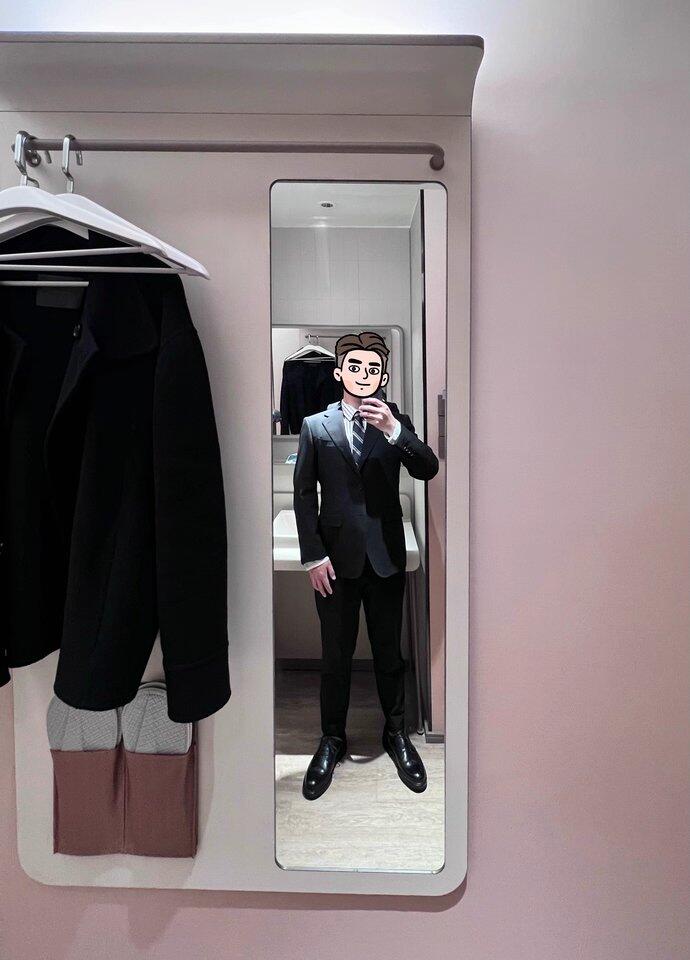
WIAI Custom Dark Navy Slim Fit Business Suit — the navy suit is the most versatile choice for any professional environment. Authoritative, polished, and appropriate for every workplace dress code. Learn how to choose the right suit for your professional wardrobe.
Step 2: Choose the Right Color for the Workplace
Color is the most immediately visible element of a suit, and in a professional context, it carries significant meaning.
Navy Blue: The Professional's First Choice
Navy is the most versatile and universally appropriate suit color for professional environments. It projects confidence and competence without the severity of black or the informality of lighter colors. It pairs with virtually every shirt and tie combination, works with brown and black shoes, and is appropriate from the most formal boardroom to the most relaxed business casual setting.
If you own one suit for work, it should be navy.
Charcoal Grey: Authority and Formality
Charcoal is the most formal of the standard business suit colors. It projects authority and seriousness — the color of choice for important presentations, client meetings, and formal occasions. It pairs beautifully with white and light blue shirts and works with both black and dark brown shoes.
Mid-Grey: Versatility and Approachability
Mid-grey occupies the space between charcoal's formality and navy's versatility. It is slightly less formal than charcoal, which makes it appropriate for a wider range of business casual environments. A mid-grey suit in a fine double-yarn twill is one of the most elegant choices available for professional wear.
Colors to Approach with Caution
Black suits are rarely appropriate for daytime business wear — they read as formal evening wear in most professional contexts. Brown suits, while experiencing a revival in fashion circles, remain inappropriate in conservative business environments. Light grey and beige suits are summer-appropriate but too casual for formal business settings.

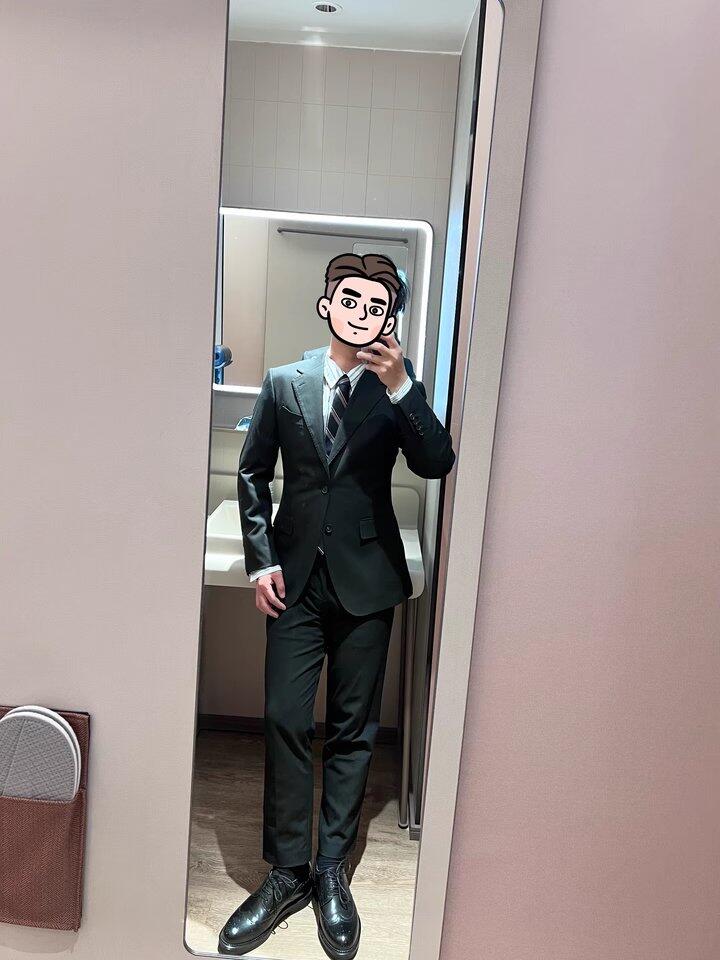
WIAI Custom Medium Gray Double-Yarn Twill Business Suit — mid-grey is one of the most elegant and versatile choices for professional wear. Polished without being severe. Discover the benefits of a custom-tailored suit for your professional wardrobe.
Step 3: Fit Is Everything
No element of a professional suit matters more than fit. A suit in an average fabric that fits perfectly will always look better than a suit in a premium fabric that does not. Fit is the difference between looking like you own the room and looking like you borrowed someone else's clothes.
The Shoulders
The shoulder seam should sit exactly at the edge of your shoulder — not hanging over it, not pulling inward. This is the most critical fit point in a jacket and the most difficult to alter correctly. If the shoulders do not fit, the jacket does not fit.
The Chest
When the jacket is buttoned, there should be no pulling across the chest. The lapels should lie flat. You should be able to slip a hand inside the jacket without forcing it, but the jacket should not hang loosely.
The Jacket Length
The jacket should cover the seat of your trousers and end approximately at the knuckle of your thumb when your arms hang naturally at your sides. A jacket that is too short looks casual; one that is too long looks dated.
The Sleeves
The jacket sleeve should end approximately 1.5cm above the shirt cuff, allowing the shirt to show. This detail — the "shirt show" — is one of the most visible indicators of a well-fitted suit.
The Trousers
Trousers should sit at the natural waist without a belt being necessary to hold them up. The break — where the trouser meets the shoe — should be minimal: a slight fold of fabric at the front, clean at the back. Excessive break looks sloppy; no break at all looks too fashion-forward for most professional environments.
The only reliable way to achieve all of these fit points simultaneously is with a custom-tailored suit built from your exact measurements.

WIAI Custom Navy Blue Herringbone Business Suit — the herringbone pattern adds subtle texture and personality while remaining entirely appropriate for professional environments. Precision fit, master craftsmanship. Discover the hidden details that define exceptional tailoring.
Step 4: The Shirt
The shirt is the foundation of the suit's visual composition. It is the element closest to your face, and it frames everything else.
White: The Professional Standard
A white dress shirt is the most versatile and universally appropriate choice for professional environments. It works with every suit color, every tie, and every occasion. It photographs well, reads as clean and authoritative, and never draws attention away from the suit or the person wearing it.
Light Blue: Approachable Authority
A light blue shirt is the second most versatile choice. It softens the formality of a charcoal suit, adds warmth to a navy suit, and reads as polished without being severe. It is the preferred choice of many senior professionals who want to project authority without appearing unapproachable.
Patterns: Use with Caution
Subtle patterns — fine stripes, small checks — are appropriate in most business professional environments. Bold patterns compete with the suit and draw attention to the shirt rather than the person. In formal business environments, stick to solid colors.
Fit Matters Here Too
A shirt that fits correctly — with a collar that closes comfortably without gaping, sleeves that end at the wrist bone, and a body that does not billow or pull — is as important as a suit that fits correctly. A well-fitted suit worn with a poorly fitted shirt is a contradiction that undermines the entire effect.
Step 5: The Tie
In formal and business professional environments, a tie is the finishing element that completes the professional suit. In business casual environments, it is optional — but when worn, it should be worn correctly.
Length
The tip of the tie should reach the top of the trouser waistband — not above it, not below it. A tie that is too short looks casual; one that is too long looks careless.
Width
The tie width should roughly match the lapel width of the jacket. For a modern slim lapel, a tie of 7–8cm is appropriate. For a classic lapel, 8–9cm. Extreme widths in either direction look dated.
Color and Pattern
For professional environments, solid colors and subtle patterns — small dots, fine stripes, simple geometrics — are the safest choices. The tie should complement the suit and shirt without competing with either. A navy suit with a white shirt and a burgundy or forest green tie is a combination that has worked for decades and will continue to work.
Step 6: The Shoes
Shoes are the element of a professional suit that most men underinvest in — and the element that most knowledgeable observers notice first.
Oxford Shoes: The Professional Standard
A plain-toe or cap-toe oxford in black or dark brown leather is the most appropriate shoe for a professional suit. It is clean, classic, and appropriate for every business environment from the most formal to the most casual.
Black vs. Brown
Black shoes are more formal and work with charcoal and dark navy suits. Brown shoes — particularly dark brown — are slightly less formal and work beautifully with navy and mid-grey suits. The old rule that brown shoes cannot be worn in the city has largely been abandoned, but black remains the safer choice in the most formal environments.
Condition Matters
Unpolished shoes undermine an otherwise excellent suit. Shoes should be polished before every important occasion and regularly maintained. A scuffed or worn shoe signals inattention to detail — exactly the opposite of what a well-fitted suit is designed to communicate.

WIAI Custom Blue Slim Fit Business Formal Suit — a complete professional look. The right suit, the right fit, the right styling. Discover why wearing a suit is a form of etiquette.
Step 7: The Details That Separate Good from Exceptional
The Pocket Square
A white linen pocket square in a flat fold is the most versatile and appropriate choice for professional environments. It adds a finishing touch that most men overlook, and it signals attention to detail. Avoid novelty pocket squares with bold patterns or colors in formal business settings.
The Watch
A classic dress watch — with a leather strap and a clean dial — is the appropriate accessory for a professional suit. A sports watch or a smartwatch reads as casual in formal business environments.
Cufflinks
If your shirt has French cuffs, cufflinks are required. Simple, understated cufflinks in silver or gold are appropriate for professional environments. Novelty cufflinks — however charming — are best reserved for less formal occasions.
The Briefcase or Portfolio
The bag you carry to work is as much a part of your professional presentation as the suit itself. A structured leather briefcase or portfolio in black or dark brown completes the professional look. A backpack, however practical, undermines the effect of a well-fitted suit in formal business environments.
The Most Common Mistakes Professionals Make with Suits
Wearing a suit that does not fit. This is the most common and most damaging mistake. An ill-fitting suit — regardless of its price or fabric — looks worse than a well-fitted suit at a fraction of the cost.
Buttoning the bottom button. On a two-button jacket, only the top button is fastened. On a three-button jacket, the middle button only, or the top two. The bottom button is never fastened. This is not a fashion preference — it is a construction requirement. The jacket is cut to hang correctly with the bottom button open.
Wearing a tie that is too short or too long. The tip of the tie should reach the waistband. This is one of the most visible indicators of whether a man knows how to dress.
Neglecting the shoes. Unpolished or worn shoes undermine everything else. Invest in quality shoes and maintain them.
Over-accessorizing. In professional environments, restraint is a virtue. One watch, one pocket square, cufflinks if appropriate. Nothing more.
WIAI: The Professional Suit, Made for You
The professional suit is not a uniform — it is a statement. And the most powerful statement is one that fits perfectly, is made from premium fabric, and reflects the care and attention to detail that professional excellence demands.
WIAI's smart body measurement technology ensures that every suit we make fits with the precision that only custom tailoring can achieve. Our full canvas construction and premium fabrics produce garments that look exceptional on the first day and continue to look exceptional for years. And our care guidance ensures that your investment is protected.
Your professional suit should work as hard as you do. WIAI makes sure it does.
Explore WIAI's professional suit collection and invest in a suit that fits your career as well as it fits your body — made exactly for you.