What Is AI Suit Measurement? How It Works for Custom Suits
AI suit measurement is the application of artificial intelligence — specifically computer vision and machine learning — to the problem of measuring a human body for a custom suit. It is the technology that makes it possible to order a genuinely well-fitted custom suit online, without visiting a tailor, without a tape measure, and without the measurement errors that have historically made online tailoring unreliable. This article explains exactly what AI suit measurement is, how it works, what it measures, and why it produces results that are comparable to professional in-person measurement.
The Problem AI Suit Measurement Solves
Custom suit tailoring has always required precise body measurement. A suit pattern is built from body dimensions — chest circumference, waist circumference, shoulder width, sleeve length, trouser inseam, seat circumference, and more than a dozen additional measurements that determine how the suit drapes and fits on a specific body. Get these measurements right, and the suit fits. Get them wrong, and it does not.
Traditional tailoring solves this with in-person measurement: a skilled tailor with a tape measure, in the same room as the customer. This works well but requires physical proximity — the customer must travel to the tailor, and the tailor must be skilled enough to take accurate measurements.
Online tailoring historically solved this with self-measurement: the customer measures themselves with a tape measure and submits the numbers. This does not work well. Self-measurement errors of 1–3 centimeters on key dimensions are common, and these errors produce suits that do not fit. The history of online tailoring is substantially a history of self-measurement failure.
AI suit measurement solves the problem differently: it extracts body dimensions from photographs using computer vision, eliminating the need for a tape measure, a tailor, or any physical contact. The customer photographs themselves; the AI measures them.
How AI Suit Measurement Works: The Technical Process
Step 1: Photograph Capture
The customer photographs themselves from four angles — front, back, left side, right side — using their smartphone camera. WIAI's platform at smart.wiaifit.com provides real-time guidance: correct distance from the camera, correct posture, correct clothing (form-fitting, not loose), and correct reference object placement for scale calibration. The photographs are taken in under ten minutes.
Step 2: Scale Calibration
The AI requires a known reference to convert pixel dimensions into real-world measurements. WIAI uses a standard reference object — held by the customer during photography — to establish the scale relationship between the image and the real world. This calibration step is critical: without accurate scale, all subsequent measurements are proportionally correct but dimensionally wrong.
Step 3: Anatomical Landmark Detection
The AI processes the photographs using a computer vision model trained on a large dataset of human body images with verified measurements. The model identifies anatomical landmarks — shoulder points, chest apex, waist narrowing, hip widening, elbow, wrist, crotch point, knee, ankle — across all four views simultaneously. These landmarks are the reference points from which measurements are calculated.
Step 4: 3D Body Model Reconstruction
Using the landmark positions from all four views, the AI reconstructs a three-dimensional model of the customer's body. This model captures not just circumferences and lengths but also the three-dimensional shape of the body — the curvature of the back, the forward tilt of the shoulders, the relationship between the chest and the waist in three dimensions. This posture data is critical for suit pattern generation: a suit for a man with forward-tilted shoulders requires a different back pattern than a suit for a man with square shoulders, even if their circumference measurements are identical.
Step 5: Measurement Extraction
From the 3D body model, the AI extracts more than 20 body dimensions relevant to suit construction: chest circumference, waist circumference, hip circumference, shoulder width, sleeve length, back length, front length, neck circumference, trouser inseam, trouser outseam, seat circumference, thigh circumference, and additional posture and shape parameters. Each measurement is extracted with an accuracy of 2–3 millimeters across all key dimensions.

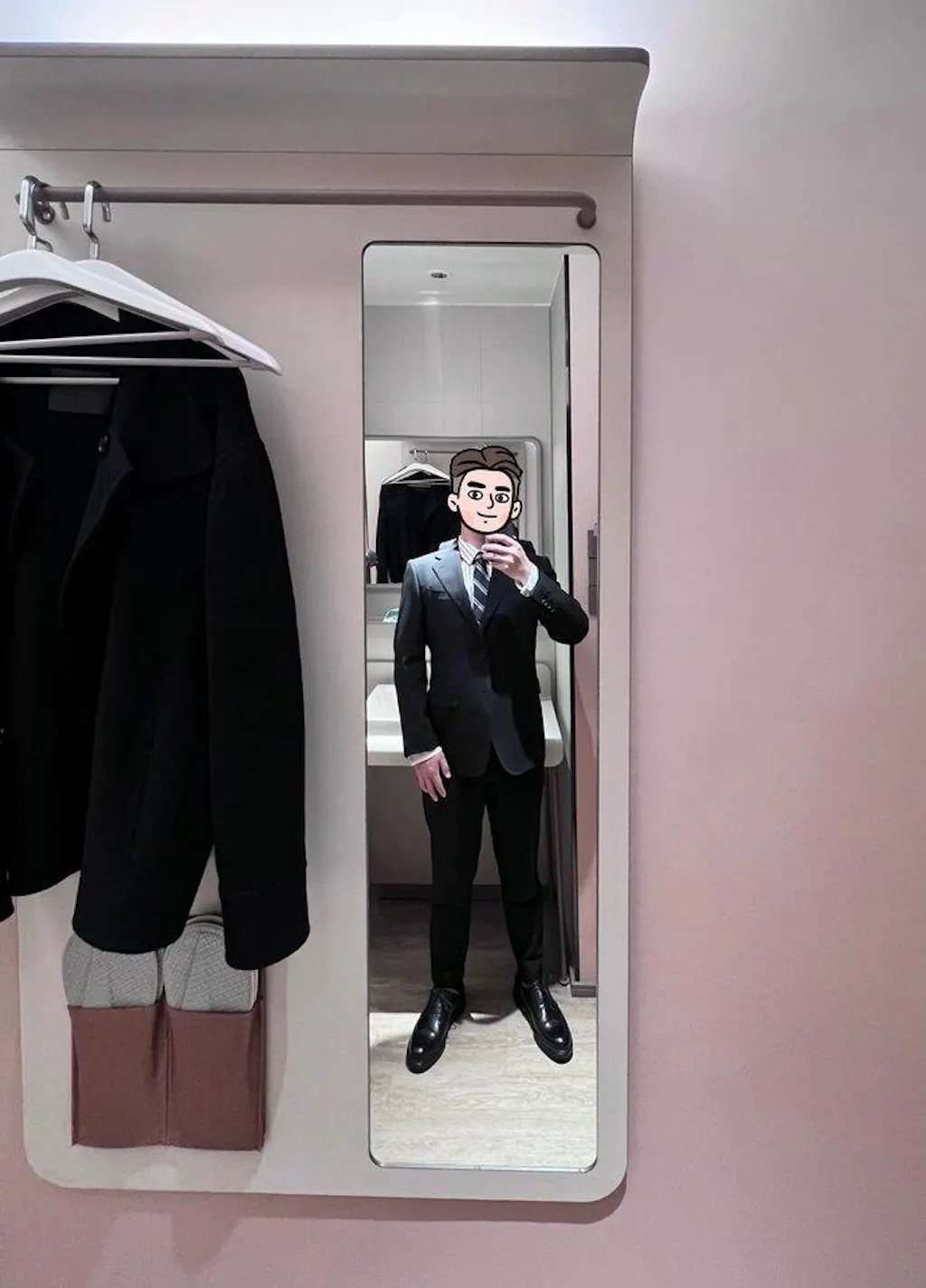
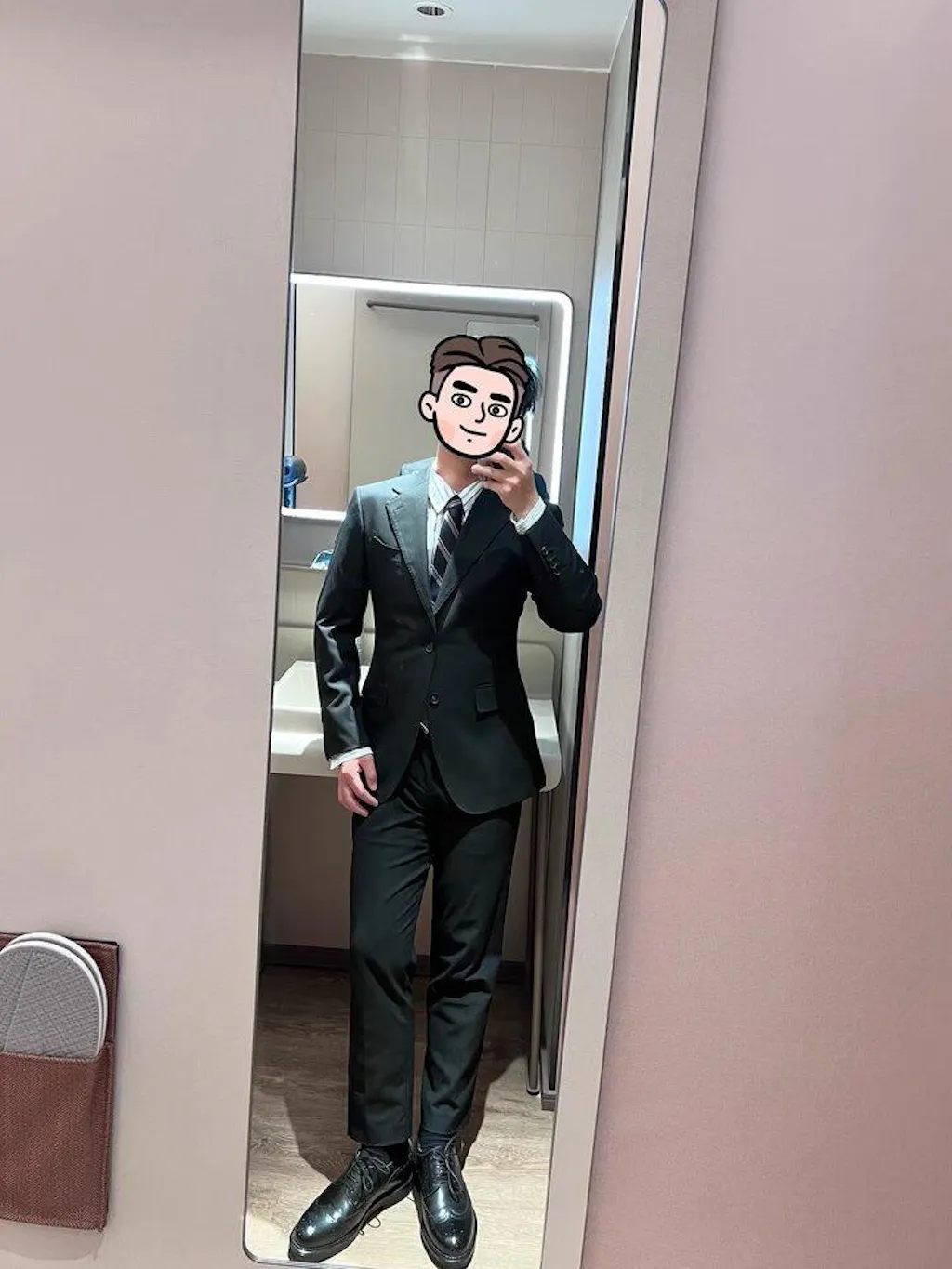
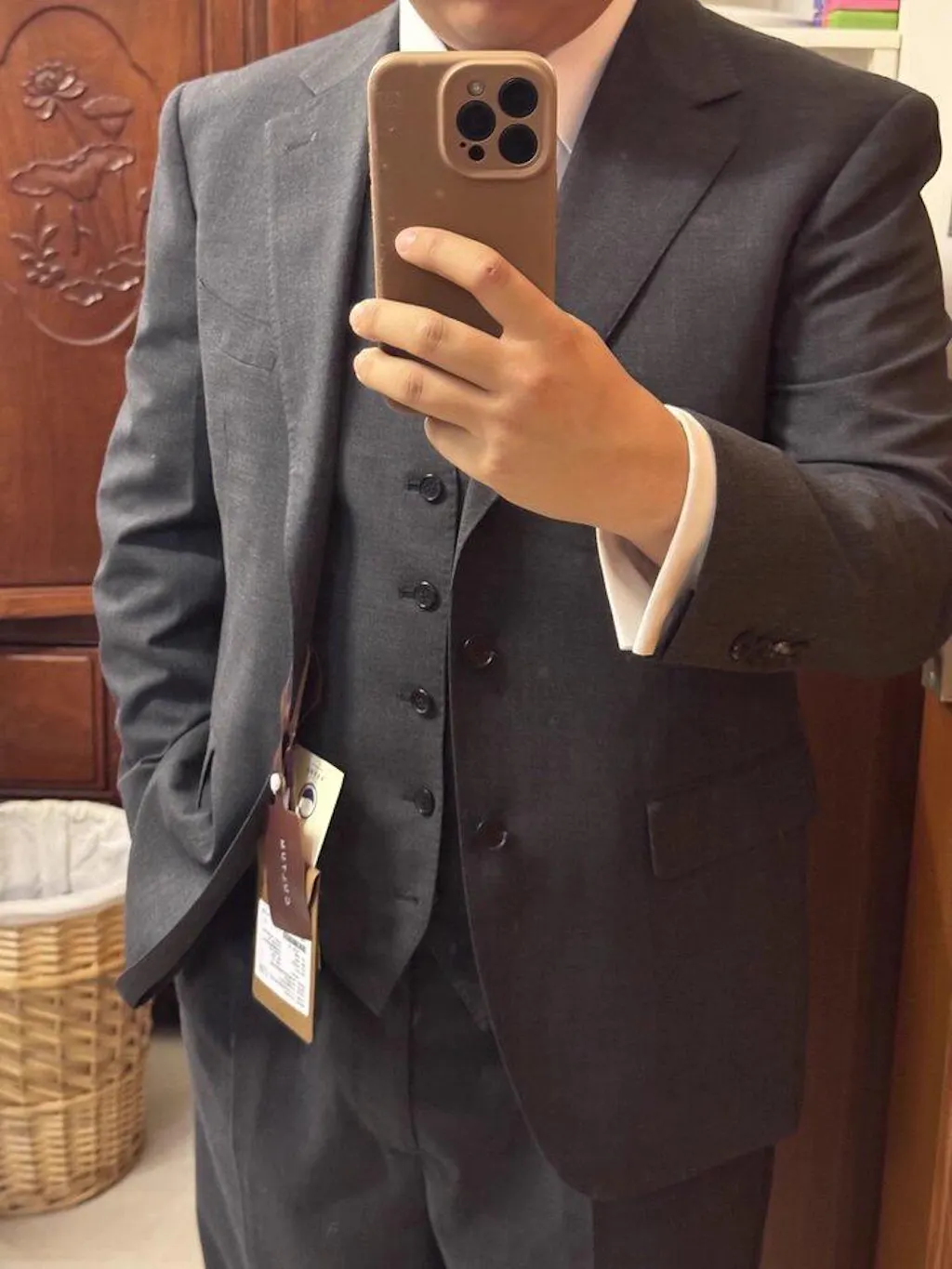
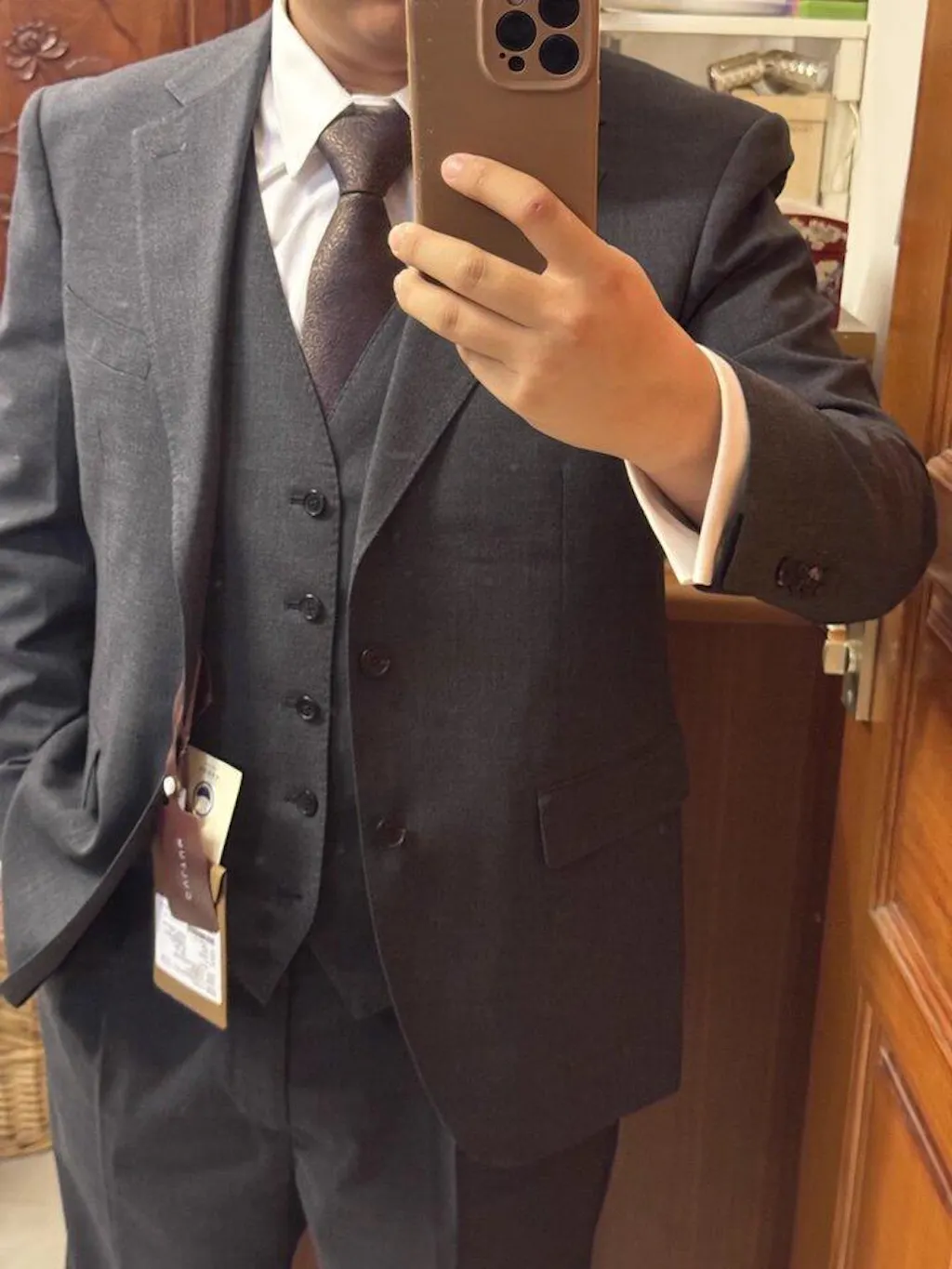
WIAI Custom Gray Brown Silk Bespoke Formal Suit — every dimension captured by AI suit measurement at smart.wiaifit.com, every panel cut to the resulting pattern. How accurate is WIAI's AI measurement? The data behind the claims.
What AI Suit Measurement Captures That Self-Measurement Cannot
The critical advantage of AI suit measurement over self-measurement is not just accuracy — it is the ability to capture dimensions and data that a customer with a tape measure cannot capture at all.
Posture data. A tape measure captures circumferences and lengths. It cannot capture the forward tilt of the shoulders, the curvature of the spine, or the three-dimensional relationship between the chest and the back. AI suit measurement captures all of these from the side-view photographs, and this data is incorporated into the suit pattern. A suit built with posture data fits differently — and better — than a suit built from circumferences and lengths alone.
Bilateral asymmetry. Most human bodies are not perfectly symmetrical. One shoulder may sit slightly higher than the other; one arm may be slightly longer. AI suit measurement captures these asymmetries from the front and back photographs and can incorporate them into the pattern. Self-measurement typically produces a single measurement for each dimension, ignoring asymmetry entirely.
Shape parameters. The circumference of the chest does not fully describe the shape of the chest. Two men with identical chest circumferences may have very different chest shapes — one broad and shallow, one narrow and deep — and these differences require different pattern shapes. AI suit measurement captures chest shape from the 3D model; self-measurement captures only circumference.
AI Suit Measurement vs. Professional Tailor Measurement
Professional in-person measurement by a skilled tailor achieves accuracy of approximately 3–5 millimeters on key dimensions. WIAI's AI suit measurement achieves 2–3 millimeters. In terms of raw measurement accuracy, AI suit measurement is comparable to — and in some dimensions superior to — professional in-person measurement.
The difference is in the fitting process. A traditional tailor conducts one or more fittings where the suit is tried on and adjusted in real time. This iterative process can correct any residual measurement errors and refine the fit based on the tailor's visual observation of how the suit sits on the body. AI suit measurement produces a single measurement profile that is used to generate the pattern without subsequent fitting adjustment.
WIAI compensates for the absence of fittings with quality control: every finished suit is measured against the customer's AI profile before shipping. Suits that fall outside WIAI's fit tolerance standards are remade before they leave the workshop. The result is a suit that fits correctly without requiring a fitting appointment.
For a deeper comparison, see AI body measurement vs professional tailor: which gives you a better fit?
The Measurements That Matter Most for Suit Fit
Of the 20+ dimensions captured by AI suit measurement, five are most critical for suit fit:
Shoulder width. The most important single measurement for jacket fit. If the shoulder seam does not sit at the correct point on the shoulder, no amount of alteration can correct the fit. AI suit measurement captures shoulder width from the front and back photographs with high precision.
Chest circumference. Determines the chest width of the jacket pattern. Errors here produce a jacket that is too tight across the chest (pulling) or too loose (boxy). AI suit measurement captures chest circumference from the 3D model, incorporating chest shape as well as circumference.
Sleeve length. Determines how much shirt cuff is visible below the jacket sleeve. AI suit measurement captures sleeve length from the side photographs, incorporating arm posture.
Trouser inseam. Determines the trouser break at the shoe. AI suit measurement captures inseam from the front and side photographs.
Seat circumference. Determines the fit of the trouser seat. Errors here produce trousers that pull across the seat (too tight) or bag (too loose). AI suit measurement captures seat circumference from the side and back photographs.

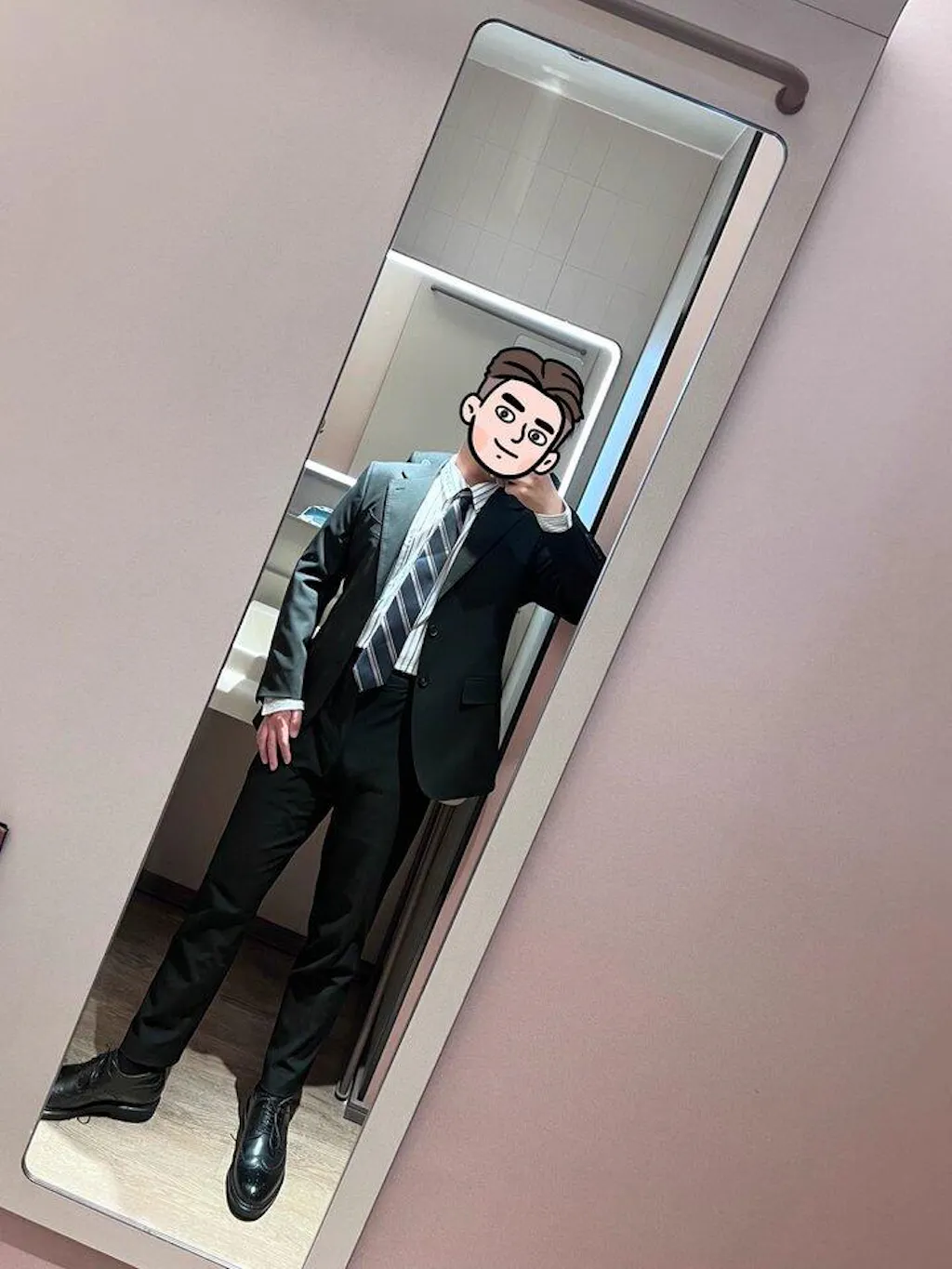
WIAI Custom Navy Blue Wool Business Casual Suit — built from an AI suit measurement profile capturing 20+ dimensions with 2–3mm accuracy. How WIAI's complete online tailoring process works end-to-end.
How to Get Your AI Suit Measurement with WIAI
Visit smart.wiaifit.com on your smartphone. Create a free account. Follow the guided photography process — the platform provides real-time feedback on distance, posture, and clothing. Complete four photographs in under ten minutes. The AI generates your complete measurement profile in under three minutes. Review and confirm your measurements. Your profile is saved to your account and used for every future WIAI order.
The measurement is free. There is no obligation to order. And once your profile is saved, every future custom suit order takes minutes — your measurements are already on file.
Frequently Asked Questions
Is AI suit measurement as accurate as a professional tailor?
WIAI's AI suit measurement achieves 2–3mm accuracy across key dimensions, comparable to professional in-person measurement (typically 3–5mm). The primary difference is that AI measurement does not include a fitting process; WIAI compensates with quality control measurement of every finished suit before shipping.
What clothing should I wear for AI suit measurement?
Form-fitting clothing — a fitted t-shirt and slim-fit trousers or leggings. Loose clothing obscures body contours and reduces measurement accuracy. Do not wear a suit or structured clothing for the measurement photographs.
How often do I need to re-measure?
Your measurement profile remains accurate as long as your body does not change significantly. If your weight changes by more than 5–7kg, or if you notice a significant change in your body shape, update your profile at smart.wiaifit.com. Otherwise, your saved profile is used for all future orders.
Get your AI suit measurement at smart.wiaifit.com — free, from any smartphone, in under ten minutes. Then order your custom suit with WIAI — built from your exact measurements, delivered in 3–4 weeks.