How to Choose Your First Custom Suit: A Complete Beginner's Guide
Ordering your first custom suit is one of the most rewarding decisions you can make in your professional wardrobe. But it can also feel overwhelming. How do you choose the right fabric? The right color? The right silhouette? What details matter, and which ones can wait? This guide answers every question a first-time custom suit buyer needs to ask — clearly, honestly, and in the right order.
Step 1: Define Why You Need the Suit
Before choosing anything else, be clear about the primary purpose of your first custom suit. This single decision will guide every choice that follows.
For work: If the suit is primarily for professional use — meetings, presentations, client-facing roles — your first suit should be in a conservative color (navy or charcoal) in a mid-weight worsted wool. Versatility and appropriateness across contexts matter more than personality.
For a specific occasion: If the suit is for a wedding, a graduation, or a formal event, the occasion's dress code and your personal role in it should guide the color and formality level. A groom's suit is a different brief from a guest's suit.
For both: If you want a suit that works for work and for special occasions, navy is the answer. It is the most versatile suit color in existence — appropriate for boardrooms, weddings, funerals, and everything in between.

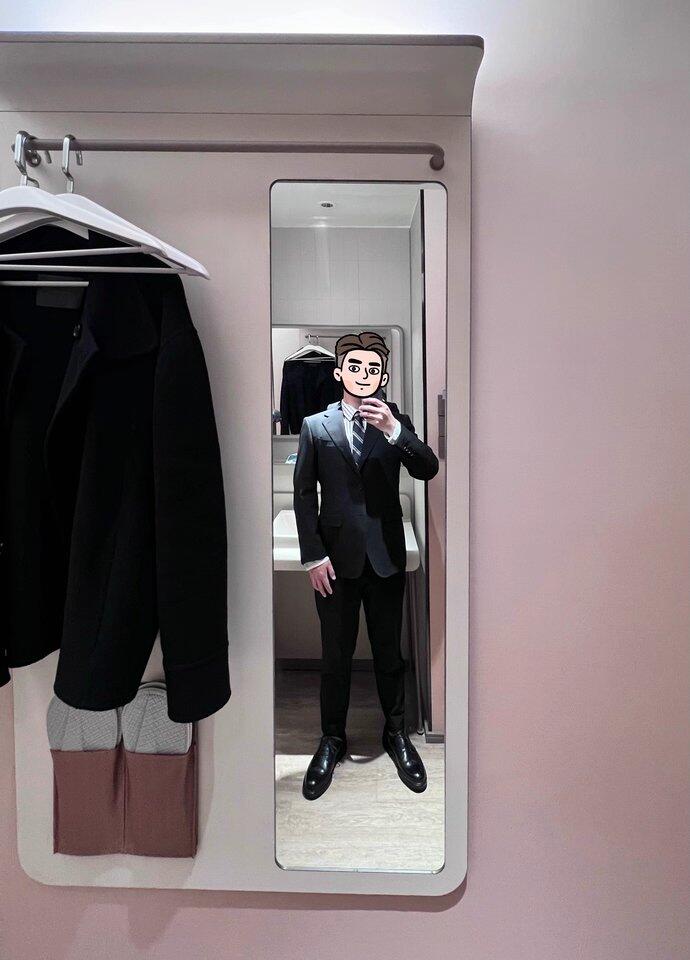
WIAI Custom Dark Navy Slim Fit Business Suit — for most first-time custom suit buyers, navy is the right starting point. Versatile, authoritative, and appropriate for every occasion. Learn how to wear your custom suit at work with confidence.
Step 2: Choose the Right Color
For a first custom suit, color choice should be guided by one principle: maximum versatility. This is not the time for experimentation — that comes with your second and third suits. Your first suit should be one you can wear to the widest possible range of occasions without hesitation.
Navy Blue: The Best First Suit Color
Navy is the single best color for a first custom suit. It is appropriate for every professional context, every formality level, and every season. It pairs with white, blue, grey, and most other shirt colors. It works with brown and black shoes. It photographs well in every light. And it is universally flattering across complexions.
If you are ordering your first custom suit and you are uncertain about color, order navy. You will not regret it.
Charcoal Grey: The Formal Alternative
If your primary use case is formal — a conservative professional environment, black-tie adjacent events, or a role where authority and formality are paramount — charcoal grey is the alternative to navy. It is slightly more formal, slightly less versatile, and equally timeless.
Mid-Grey: The Versatile Middle Ground
Mid-grey is slightly less formal than charcoal and works beautifully across business professional and business casual environments. A mid-grey suit in a fine double-yarn twill is one of the most elegant first suit choices available — sophisticated without being severe.
Step 3: Choose the Right Fabric
Fabric is the element that most first-time custom suit buyers underestimate — and the one that most experienced suit wearers prioritize. The fabric determines how the suit looks, feels, drapes, and wears over time. A suit in a poor fabric will never be exceptional, regardless of how well it fits.
Wool: The Only Choice for a First Suit
For a first custom suit, the fabric should be wool. Not a wool blend, not a synthetic, not linen — wool. Wool is the foundation of suiting for a reason: it breathes, regulates temperature, resists wrinkles, and drapes with a weight and fluidity that no other fiber can replicate.
The weight of the wool matters. For a year-round suit, choose a mid-weight worsted wool in the range of 260g–320g per linear meter. This weight is comfortable across most seasons and most climates, and it holds its shape through a full day of wear.
Super Numbers: What They Mean
You will encounter "Super 100s," "Super 120s," and higher numbers when choosing fabric. These refer to the fineness of the wool fiber — higher numbers indicate finer, softer, more luxurious fabric. For a first suit, Super 100s to Super 130s is the ideal range: fine enough to feel luxurious, robust enough to wear regularly without showing wear. The world's great fabric mills produce excellent options across this range.

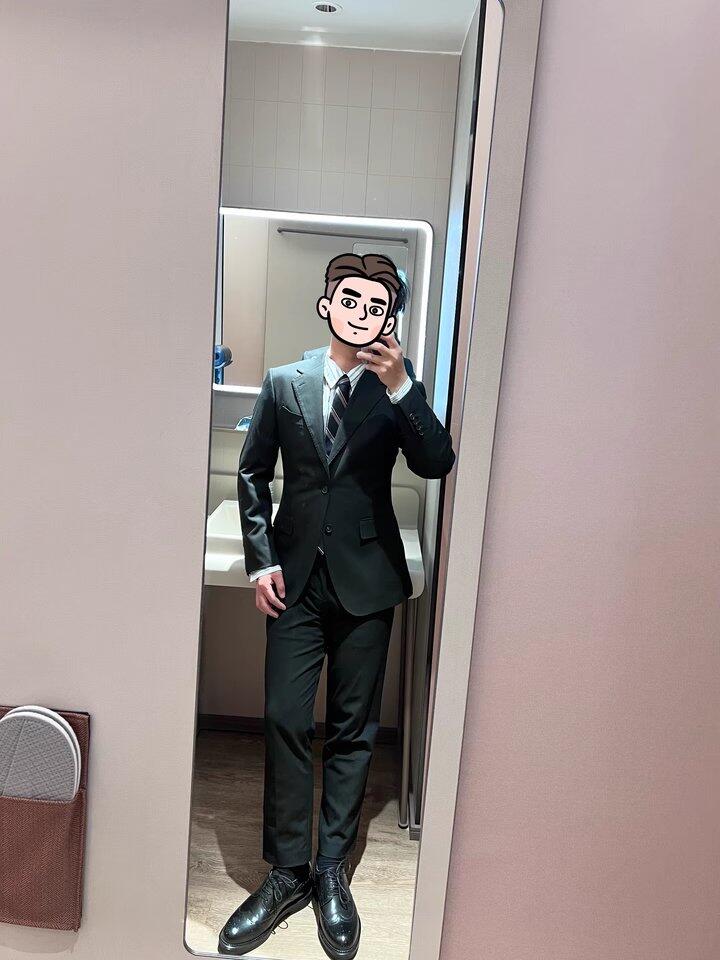
WIAI Custom Medium Gray Double-Yarn Twill Business Suit — premium wool construction in a versatile mid-grey. The ideal fabric and color combination for a first custom suit. Discover the hidden details that define exceptional tailoring.
Step 4: Choose the Right Silhouette
Silhouette — the overall shape of the suit — is the element that most visibly communicates your style personality. For a first suit, the goal is a modern, clean silhouette that is neither aggressively fashion-forward nor dated.
Slim Fit: The Modern Standard
A slim fit suit — with a suppressed waist, a close chest, and a clean trouser line — is the most contemporary and most flattering silhouette for most body types. It reads as modern and intentional without being extreme. For a first custom suit, slim fit is the right starting point for most men.
Classic Fit: The Timeless Alternative
A classic fit — with more ease through the chest and waist, and a fuller trouser — is the appropriate choice for men who prefer a more traditional silhouette, or who find slim fit restrictive. It is slightly less contemporary but equally elegant when executed correctly.
What to Avoid
For a first suit, avoid extreme silhouettes in either direction. An aggressively oversized suit or an extremely tight slim fit will look dated quickly and limit the occasions on which the suit is appropriate. The goal is a silhouette that will look correct in five years as well as today.
Step 5: Understand the Key Details
Custom tailoring offers a level of detail that off-the-rack cannot match. For a first suit, focus on the details that have the most impact on the overall look — and keep the rest simple.
Lapel Style
The two main lapel styles are notch lapel (the most common, appropriate for all occasions) and peak lapel (more formal, associated with double-breasted suits and black tie). For a first suit, a notch lapel is the right choice — versatile, classic, and appropriate everywhere.
Button Configuration
A two-button single-breasted jacket is the most versatile configuration for a first suit. It is appropriate for every professional context and every formality level. Three-button jackets are slightly more traditional; double-breasted jackets are more formal and make a stronger style statement.
Trouser Details
For a first suit, flat-front trousers in a slim or straight cut are the most versatile choice. Pleated trousers are more traditional and offer more comfort; they are the right choice if you prefer a classic silhouette or need more ease through the seat and thigh.
Lining
A full lining makes the jacket easier to put on and take off, and it protects the outer fabric from wear. For a first suit, a full lining in a quality fabric is the right choice.

WIAI Custom Navy Blue Herringbone Business Suit — a subtle herringbone pattern adds texture and personality to a classic navy suit. The ideal choice for a first custom suit with a point of difference. Discover why online custom tailoring is the smart choice for your first suit.
Step 6: Get the Measurement Right
The most important element of any custom suit is the measurement. A suit can only fit as well as the measurements it was built from. This is where most online custom suit experiences succeed or fail — and where WIAI's approach is fundamentally different from most competitors.
The Problem with Self-Measurement
Most online custom suit brands ask customers to measure themselves. This approach has a fundamental flaw: most people are not skilled at taking their own measurements accurately. A chest measurement that is two centimeters off, or a sleeve length that is estimated rather than measured precisely, produces a suit that does not fit correctly.
The WIAI Solution
WIAI's smart body measurement technology captures your exact dimensions with millimeter-level accuracy, eliminating the human error that makes self-measurement unreliable. The result is a suit that arrives ready to wear — no alterations needed, no guesswork, no disappointment. For a first-time custom suit buyer, this precision is particularly valuable: you do not yet have the experience to know whether a measurement is correct, and you should not have to.
Step 7: Understand Construction Quality
Not all custom suits are built the same way. The internal construction of a jacket — specifically, whether it uses full canvas, half canvas, or fused interlining — determines how it drapes, how it molds to your body over time, and how long it lasts.
A full canvas suit is the gold standard: the internal structure is hand-stitched horsehair canvas that molds to the wearer's body over time, producing a drape and fit that improves with wear. WIAI uses full canvas construction as standard — not as an upgrade, but as the baseline for every suit we make.

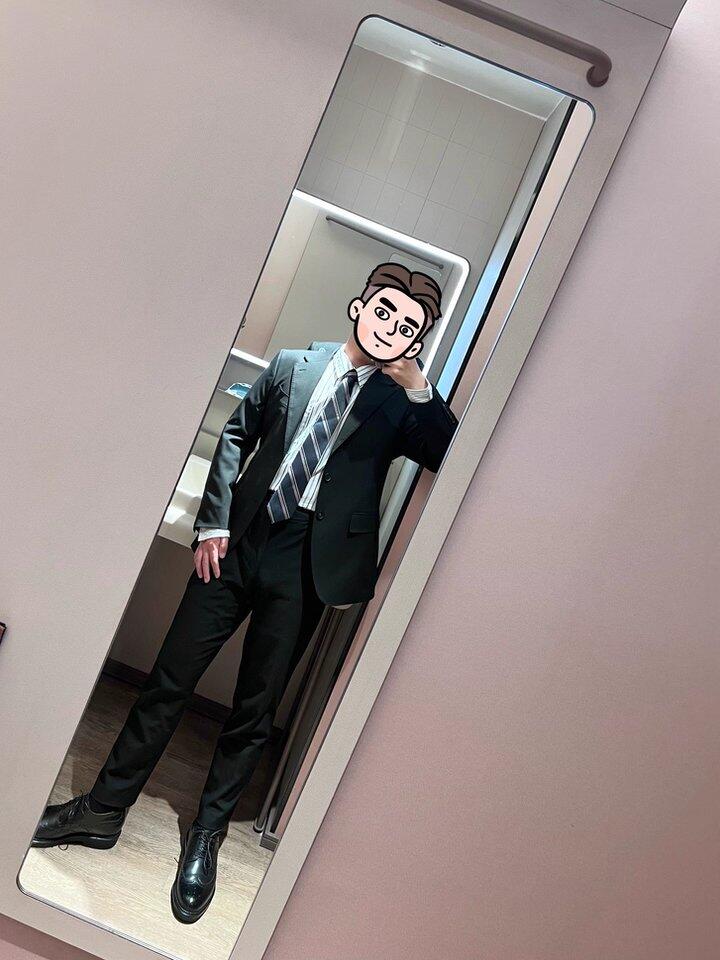
WIAI Custom Gray Slim Fit Business Wedding Suit — the result of getting every decision right: color, fabric, silhouette, details, measurement, and construction. A suit that fits perfectly and looks exceptional. Learn how to care for your first custom suit to protect your investment.
The First-Time Buyer's Checklist
Before placing your first custom suit order, confirm that you have answered these questions.
Purpose: What is the primary occasion for this suit? Work, a specific event, or both?
Color: Navy for maximum versatility. Charcoal for maximum formality. Mid-grey for elegant versatility.
Fabric: Mid-weight worsted wool, Super 100s to Super 130s, in the 260g–320g range.
Silhouette: Slim fit for a modern look. Classic fit for a traditional preference.
Details: Notch lapel, two-button, flat-front trousers, full lining.
Measurement: Use a brand with precision measurement technology, not self-measurement.
Construction: Full canvas only. Do not accept fused construction for a suit you intend to wear for years.
What to Expect After Your First Custom Suit
The experience of wearing a suit that fits perfectly — that sits correctly on your shoulders, closes without pulling, and moves with your body rather than against it — is genuinely different from anything off-the-rack can provide. Most first-time custom suit buyers describe it as a revelation: the realization that they have been wearing suits that did not fit for years, and that the difference is immediately visible to everyone around them.
After your first custom suit, you will find it difficult to go back. That is not a warning — it is a promise.
WIAI: The Right Choice for Your First Custom Suit
WIAI is designed specifically to make the first custom suit experience as straightforward and rewarding as possible. Our smart body measurement technology eliminates the measurement uncertainty that makes first-time buyers nervous. Our curated fabric selection makes the fabric choice manageable rather than overwhelming. Our factory-direct model ensures that the quality of your suit reflects the actual cost of making it, not the overhead of a retail operation.
Your first custom suit should be the beginning of a long relationship with tailored dressing. WIAI makes sure it starts correctly.
Start your first custom suit with WIAI — precision fit, premium fabric, master craftsmanship, delivered anywhere in the world.