How to Pack a Suit for Business Travel Without Wrinkles: The Complete Guide
You have an important meeting the morning after a long-haul flight. Your suit is in your luggage. The question is whether it will arrive looking as good as it did when you packed it — or whether you will spend the first hour of your trip hunting for a hotel iron. This guide covers every method for packing a suit without wrinkles, from the techniques that work to the equipment that helps, and explains why the fabric and construction of your suit matter as much as how you fold it.
Why Suits Wrinkle When Packed — and Why Some Don't
Before covering packing techniques, it is worth understanding why suits wrinkle in the first place. Wrinkles form when fabric fibers are compressed and held in a deformed position long enough to set. The longer the compression, the more heat and humidity involved, and the less resilient the fiber, the more severe the wrinkles.
This is why fabric choice matters as much as packing technique. A suit made from fine wool — particularly a mid-weight worsted wool in the Super 100s to Super 130s range — has a natural fiber memory that resists wrinkle formation and recovers quickly when wrinkles do occur. A suit made from a synthetic blend lacks this memory and will wrinkle more severely and recover more slowly.
Wool's natural crimp structure acts as a spring: when compressed, the fibers want to return to their original position. This is why a wool suit hung overnight after a long flight will often recover completely without any pressing. A synthetic suit in the same situation will require ironing.
The second factor is construction. A full canvas suit holds its three-dimensional shape better than a fused suit when packed, because the canvas interlining provides structure that resists compression. A fused suit, where the interlining is glued to the outer fabric, is more susceptible to permanent deformation when packed tightly.

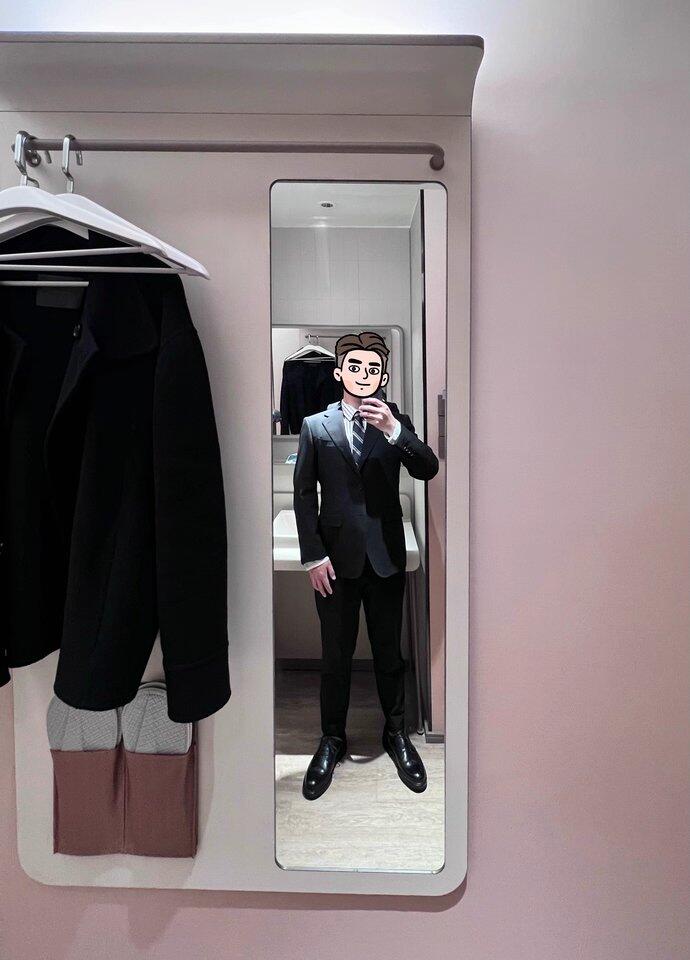
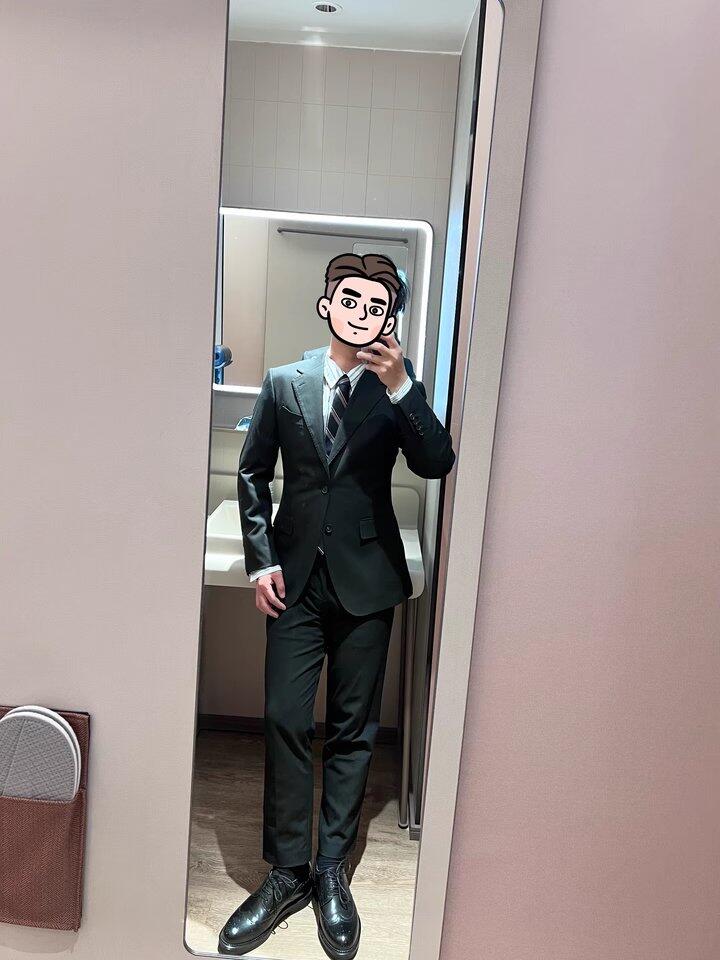
WIAI Custom Dark Navy Slim Fit Business Suit — premium wool construction with natural wrinkle resistance. The right suit for business travel starts with the right fabric. Learn how to wear your suit with authority at every business destination.
Method 1: The Inside-Out Fold (Best for Carry-On)
The inside-out fold is the most widely recommended technique for packing a suit jacket in a carry-on bag or a flat-pack suitcase. It works by using the jacket's own structure to protect the outer fabric from compression.
Step 1: Hold the jacket by the shoulders, facing you.
Step 2: Put your hands inside the shoulders so that your fingers are in the shoulder seams. Turn one shoulder inside out into the other, so that the jacket folds in half lengthwise with the lining on the outside.
Step 3: Smooth the jacket flat. The lining is now on the outside, protecting the outer fabric from direct contact with other items in your bag.
Step 4: Fold the jacket in half horizontally, bringing the hem up to the collar. Place it flat in your bag.
This method works because the jacket's padded shoulders and structured chest provide a natural buffer against compression, and the lining — which is more resilient than the outer fabric — takes the direct contact with other items.
Method 2: The Bundle Wrap (Best for Checked Luggage)
The bundle wrap is a packing technique that minimizes wrinkles by wrapping garments around a central core rather than folding them individually. It is particularly effective for suits packed in checked luggage where space is less constrained.
Step 1: Lay the jacket face-down on a flat surface, smoothed completely flat.
Step 2: Lay the trousers across the jacket, perpendicular to it, with the waistband at the center of the jacket.
Step 3: Place a soft item — a rolled sweater or a packing cube filled with soft items — at the center of the trousers as the bundle's core.
Step 4: Wrap the trouser legs around the core, then wrap the jacket around the bundle.
The bundle wrap works because the garments are curved rather than folded, and curves create fewer sharp creases than folds. The soft core absorbs compression from outside the bundle.
Method 3: The Suit Bag (Best for Short Trips)
A dedicated suit bag — a long, flat garment bag designed to carry suits on a hanger — is the most protective option for short trips where the bag can be carried on the plane and hung in the overhead locker or a wardrobe compartment.
The suit bag keeps the jacket on its hanger, maintaining its three-dimensional shape throughout the journey. The key is to ensure the bag is not overpacked — a suit bag stuffed with too many garments will compress the suit as effectively as a suitcase.
For longer trips where the suit bag must be checked, fold it carefully so that the jacket is folded as few times as possible, and place it on top of other items in the checked bag rather than underneath them.

WIAI Custom Navy Blue Wool Formal Business Suit — wool's natural wrinkle resistance makes it the ideal fabric for business travel. Pack it correctly and it arrives ready to wear. Discover why a custom wool suit is the smartest investment for the business traveler.
Packing the Trousers: The Detail Most Men Get Wrong
Trousers are more susceptible to wrinkles than jackets because they lack the jacket's internal structure. The most common mistake is folding trousers in half and placing them in the bag — this creates a sharp crease at the fold point that is difficult to remove without pressing.
The correct method: Fold the trousers along the natural crease line — the front and back creases that run from waist to hem. Lay them flat, smoothed completely, and roll them loosely from the hem upward. A loose roll creates a curve rather than a fold, and curves wrinkle less than folds.
Alternatively, use the trouser bar in a suit bag: hang the trousers over the bar at the knee, so that the weight of the trouser legs keeps them smooth during transit.
The Shirt: Pack It Last, Wear It First
Dress shirts are the most wrinkle-prone element of a business travel wardrobe. The best approach is to pack them in a dedicated shirt folder — a flat board around which the shirt is wrapped, keeping it smooth and preventing the collar from being crushed.
If a shirt folder is not available, fold the shirt carefully along its natural seam lines, place a piece of tissue paper between each fold to reduce friction, and pack it on top of other items rather than underneath them.
For multi-day trips, consider packing one extra shirt per day rather than relying on hotel laundry services, which can be slow and expensive. A well-packed shirt takes up minimal space and eliminates the risk of arriving at an important meeting in a shirt that has not been returned from the laundry.
Recovery: What to Do When Wrinkles Happen
Even with the best packing technique, some wrinkles are inevitable on long trips. Here is how to remove them quickly and effectively.
Hanging in a Steamy Bathroom
The simplest and most effective wrinkle removal method for wool suits is to hang the jacket and trousers in a bathroom while running a hot shower. The steam relaxes the wool fibers, allowing them to return to their natural position. Leave the suit hanging for 15–20 minutes after the shower, then allow it to dry completely before wearing.
This method works because of wool's natural response to moisture and heat — the same properties that allow a tailor to shape wool with a steam iron. It is gentle, requires no equipment, and is available in every hotel room in the world.
A Travel Steamer
A compact travel steamer is the most effective tool for removing wrinkles from a suit on the road. It is faster than the bathroom method, more precise, and works on both wool and synthetic fabrics. A good travel steamer weighs less than 500g and fits easily in a carry-on bag.
Use the steamer with the jacket hanging on a hanger, holding the steamer head 2–3cm from the fabric and moving it slowly downward. Do not press the steamer head against the fabric — the steam should do the work, not the pressure.
The Hotel Iron: Use with Caution
Hotel irons are effective but risky. Always use the iron on the lowest setting appropriate for wool, always use a pressing cloth between the iron and the fabric, and never iron a suit that is still damp. An iron used incorrectly on fine wool can permanently damage the fabric's surface, creating a shine that cannot be removed.

WIAI Custom Blue Slim Fit Business Formal Suit — pack it correctly, hang it on arrival, and it is ready to wear. The right suit for the business traveler who cannot afford to look anything less than exceptional. See how style icons maintain their look on the road.
The Business Travel Suit Wardrobe: What to Pack for a Week
For a week of business travel, the most efficient suit wardrobe is built around one or two suits in versatile colors, with enough shirts and accessories to create variety without excess weight.
The one-suit week: One navy or charcoal suit, five shirts in varying colors and patterns, three ties, and two pairs of shoes. The suit is worn on alternating days, allowing it to rest and recover between wearings. This is the most efficient approach for trips where luggage weight is a constraint.
The two-suit week: One navy suit and one charcoal or mid-grey suit, three to four shirts, two ties, and two pairs of shoes. The suits alternate daily, each getting adequate rest, and the different colors provide visual variety across the week.
In both cases, the key is choosing suits in fabrics that travel well — mid-weight worsted wool in the Super 100s to Super 120s range, with full canvas construction. These suits will arrive in better condition, recover more quickly, and look better throughout the trip than any alternative.

WIAI Custom Medium Gray Double-Yarn Twill Business Suit — the ideal travel companion. Premium wool construction, natural wrinkle resistance, and a versatile color that works across every business context. Building your business travel wardrobe? Start with the right suit.
The Business Traveler's Packing Checklist
Before packing: Brush the suit to remove any surface dust or lint. Check for any loose buttons or minor repairs needed. Allow the suit to hang for at least an hour after its last wearing before packing.
Packing the jacket: Use the inside-out fold for carry-on; the bundle wrap for checked luggage. Place the jacket on top of other items, never underneath.
Packing the trousers: Roll loosely along the natural crease line, or use the trouser bar in a suit bag.
On arrival: Unpack the suit immediately. Hang the jacket and trousers on proper hangers. If wrinkles are present, use the bathroom steam method or a travel steamer before pressing.
Between wearings: Allow the suit to hang and air for at least 24 hours between wearings. Brush after each wearing to remove surface dust.
WIAI: The Suit That Travels as Well as You Do
The best insurance against a wrinkled suit on a business trip is a suit made from the right fabric with the right construction. WIAI's custom suits in premium wool — with full canvas construction and precision fit — are built to perform under the demands of regular business travel. They pack better, recover faster, and look better throughout a long trip than any synthetic alternative.
Because when you arrive at an important meeting after a long flight, the last thing you should be thinking about is your suit.
Explore WIAI's custom suit collection — the business traveler's suit, made exactly for you.